
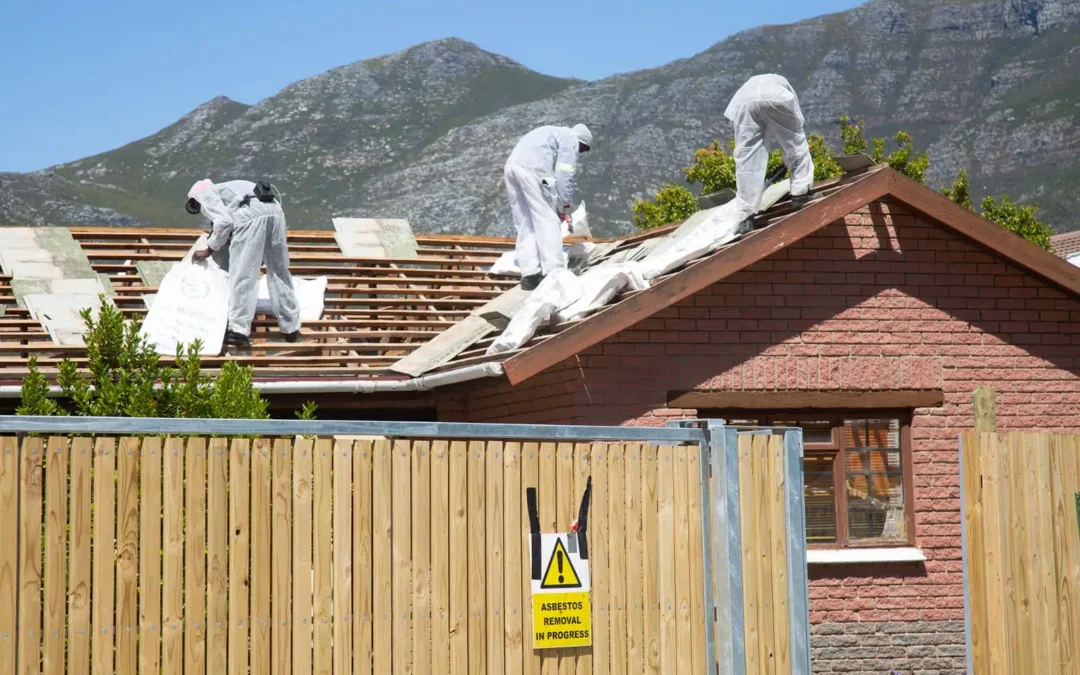
At Asbestos Removal and Roofing, a subsidiary of CTW Construction Group, safety is at the core of everything we do – especially when it comes to asbestos removal safety. Understanding the legal requirements and safety procedures is essential for property owners, employers and contractors alike. Cape town in particular have many residential, commercial and industrial buildings containing asbestos, mostly built pre-1990 when asbestos was starting to be phased out.
Identifying Asbestos on Your Property
According to the Asbestos Abatement Regulations – 2020, if asbestos is suspected on a property, it is the responsibility of the property owner or employer to have the material properly identified. This must be done by a competent person, which is someone who must be qualified to do this – typically a representative from a registered asbestos removal company.
If there is any uncertainty, samples should be sent to a qualified laboratory for testing. At Asbestos Removal and Roofing, we assist with both inspection and sampling to ensure accurate identification. Lab results can typically be expected within two to three days.
Asbestos Inventory Requirements for Asbestos Removal Safety
Should asbestos be identified, all identified, or suspected asbestos-containing materials must be recorded in an official asbestos inventory. This document must be kept on site and updated as necessary.
This inventory has to be shared with the appointed asbestos removal contractor as well as the Approved Inspection Authority (AIA) before any work may commence.
The role of the AIA around Asbestos Removal Safety
The AIA is responsible for compiling a workplan that must be submitted to the Department of Employment and Labour. Once the workplan has been approved (which takes approximately two weeks), removal and or demolishing can begin. This happens under strict supervision, where the AIA monitors the site throughout the project to ensure full compliance and safety of the asbestos workers. Upon completion, air quality testing is conducted to confirm that asbestos fibre levels are within legal limits. Only once the area is deemed safe will it be cleared for re-occupation.
Training and Safety for Workers
All asbestos workers are required to undergo annual health and safety training. Without valid certification, workers are not permitted on site.
Training includes:
- Proper use of control measures to prevent the spread of airborne asbestos fibres, such as wrapping the asbestos in plastic sheets, or wetting it.
- Correct use of personal protective equipment (PPE).
- Decontamination of tools and equipment
- Proper demarcation of regulated asbestos areas with approved signage
Why choose Asbestos Removal and Roofing?
Backed by the experience and reputation of CTW Construction Group, Asbestos Removal and Roofing offers a specialized, compliant, and reliable service. We are committed to maintaining the highest safety standards while delivering practical and cost-effective solutions across Cape Town and the surrounding areas.
If you suspect asbestos on your property or require professional roofing services, we’re her to help.
Frequently Asked Questions about Asbestos Removal Safety
How do I know if my roof or ceiling contains asbestos?
In South Africa, most buildings constructed before 1990—when asbestos began being phased out—likely contain asbestos in roofing sheets, ceiling boards, or gutters. Because asbestos fibres are microscopic, the only way to be certain is through a professional inspection. A “competent person” must take a 1cm x 1cm sample and send it to a qualified laboratory. At Asbestos Removal & Roofing, we typically provide lab results within two to three days.
Can I test for asbestos myself?
It is strongly discouraged. Disturbing asbestos-containing materials (ACM) to take a sample can release dangerous airborne fibres. The 2020 Regulations require a “competent person” (usually a representative from a registered asbestos contractor) to handle identification and sampling to ensure safety and legal compliance.
What are the Asbestos Abatement Regulations 2020?
These are the current South African laws governing how asbestos is identified, managed, and removed. They place the legal responsibility on the property owner or employer to identify any asbestos on the premises, maintain an official inventory, and ensure that any removal is done by a registered contractor under the supervision of an Approved Inspection Authority (AIA).
Is an asbestos inventory mandatory for my property?
Yes. If asbestos is identified or suspected, the owner must record it in an official Asbestos Inventory. This document must be kept on-site, updated regularly (at least every 24 months), and shared with contractors or authorities before any maintenance or construction work begins.
Do I need an asbestos certificate to sell my house in South Africa?
While a specific “asbestos clearance certificate” isn’t always required for a standard property transfer yet, Regulation 4(7) states that an owner must provide the existing asbestos inventory to the new owner during a transfer of ownership. If you are aware of asbestos on the property, disclosing this and providing the inventory is a legal requirement.
Can I remove asbestos roof sheets myself?
Legally, no. The removal of asbestos-containing materials is strictly regulated. For most residential and commercial projects (Type 2 or Type 3 work), you must use a Registered Asbestos Contractor. Attempting DIY removal is not only a health risk to you and your neighbours but can lead to heavy fines or legal action for improper disposal.
What is the role of an Approved Inspection Authority (AIA)?
The AIA acts as an independent safety auditor. Their role includes:
-
Compiling a specialized Work Plan for the Department of Employment and Labour.
-
Monitoring the site during removal to ensure workers follow safety protocols.
-
Conducting air quality testing after the work is finished to ensure no fibres remain.
How long does it take to get approval for asbestos removal?
Once the AIA submits the Work Plan to the Department of Employment and Labour, approval typically takes approximately two weeks. Actual removal cannot begin until this official approval is granted.
Is it safe to stay in the building during asbestos removal?
Generally, the work area is strictly demarcated with approved signage and restricted access. In many cases, especially for major roof replacements, the building should not be occupied during the active removal phase. The AIA must conduct air monitoring and issue a Clearance Certificate before the area is deemed safe for re-occupation.